You Never Fail Until You Quit: A Designer's Review
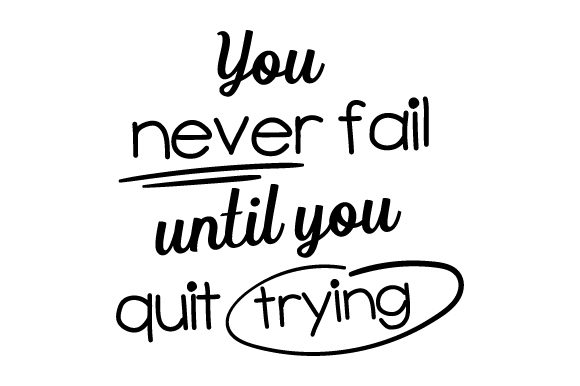
As someone who spends more time staring at stitch maps than most people spend on their phones, I approach every new machine embroidery design with a mix of optimism and skepticism. We have all been there: you buy a file based on a cute thumbnail, load it onto your machine, and halfway through the run, you realize the density is too high for the fabric or the lettering is so small it will turn into a bird's nest. That is why I was particularly interested in putting the "You Never Fail Until You Quit Trying" design through its paces before committing it to a client project or adding it to my shop inventory.
This phrase carries a heavy emotional weight. It is not just a catchy slogan; it is a mantra for resilience. When evaluating this specific asset, which falls under the School Amp category and general Crafts, my first thought wasn't about the technical specs, but about the mood. The layout feels intentional, balancing the length of the sentence with a visual flow that suggests movement without being chaotic. For a designer, the "visual personality" of a quote is just as important as the font choice. Does it look aggressive? Encouraging? Playful? This design leans heavily into the encouraging lane, making it a prime candidate for items meant to uplift the recipient.
Real-World Application: The Custom Tote Bag Test
To truly understand how this embroidery file performs, I imagined a specific real-life scenario: a custom order for a local teacher appreciation event. The client wanted durable, usable gifts that wouldn't end up in a landfill after a week. A canvas tote bag design seemed like the perfect vessel. Canvas provides a stable base, which is crucial when dealing with text-heavy designs where clarity is king.
Loading the file, I immediately appreciated the versatility of the formats provided. Having access to SVG, Transparent PNG, EPS, and DXF means this isn't just for stitching. As an Etsy seller or creative entrepreneur, you can use the vector files for printable mockups or sublimation previews before you ever thread a needle. This flexibility adds significant value to the design assets. However, my primary focus was the stitched result. On the canvas tote, the design held its shape beautifully. The spacing between the words allowed the texture of the fabric to breathe, preventing that stiff, cardboard-like feel that often plagues dense text embroidery.
Imagine this same design on a sweatshirt embroidery project for a student athlete or a graduation gift. The message resonates deeply in academic and sports environments. Because the design is categorized under School Amp, it naturally fits into back-to-school collections, team spirit wear, or nursery decor for a baby's room where parents hope to instill grit early on. The visual appeal translates well across these different mediums, maintaining its professionalism whether it's on a structured cap or a soft baby embroidery blanket.
Technical Considerations and Fabric Challenges
While the design shines on medium-weight cottons and canvas, a responsible reviewer must discuss where caution is needed. If you are planning to use this on stretchy fabrics like jersey knits or thin performance tees, you need to be mindful of stitch density. Long sentences can sometimes pull on lightweight materials if the underlay isn't sufficient or if the stabilizer choice is wrong. For a finished product that needs to withstand frequent washing, I would strongly recommend using a cut-away stabilizer rather than tear-away, especially if the garment will be worn actively.
Another critical factor is the hoop size. Depending on how your machine handles the import of the SVG or DXF, you might need to resize the design to fit a smaller hoop, such as those used for caps or infant onesies. Here is where the detail level matters. If you shrink this design too much, the negative space between the letters in "Until" or "Trying" might close up, turning crisp text into a solid blob. Always test the design on scrap fabric first. I cannot stress this enough. Run a sample on the exact material you intend to use for the final handmade product.
Curved surfaces present another challenge. If you are applying this to a baseball cap, the curvature can distort the perception of the text. The straight lines of the typography might appear to bow if not hooped correctly. For commercial embroidery projects where consistency is key, I suggest creating a template or using a magnetic frame to ensure the design sits perfectly flat during the stitching process. Additionally, consider the thread colors. While black on white is classic, testing high-contrast combinations ensures readability. A dark thread on a dark fabric might look sophisticated in a digital preview but fail completely in reality.
Value Proposition for Small Business Owners
For those running a craft business, the viability of a design often comes down to customer reaction. Will this sell? The phrase "You Never Fail Until You Quit Trying" has universal appeal. It transcends age groups, making it a safe bet for a wide range of personalized gifts. From holiday embroidery projects to wedding gifts for a couple starting a business together, the applicability is vast.
The inclusion of multiple file formats also opens up revenue streams beyond just physical goods. You could offer this as part of a bundle for other makers who need a transparent PNG for their own printable mockups or an SVG for vinyl cutting. This versatility increases the return on investment for the purchase. However, always check the licensing terms provided with the download. Just because you receive the files doesn't automatically grant unlimited commercial rights for reselling the digital file itself versus the physical stitched item.
Brand consistency is another angle to consider. If your small shop product line focuses on motivational gear, this design fits seamlessly. It enhances brand recognition by associating your shop with positive, empowering messages. Customers trust brands that deliver quality, and a clean, well-executed stitch job reinforces that trust. A sloppy execution, on the other hand, can damage your reputation quickly. Therefore, the quality of the source file is paramount, and this design appears to offer the clean lines necessary for a professional outcome.
Final Verdict and Designer Notes
In conclusion, "You Never Fail Until You Quit Trying" is a robust addition to any embroidery library. It balances emotional resonance with practical design elements. Before you start your next embroidery project, keep these practical notes in mind:
- Test First: Always stitch a sample on scrap fabric identical to your final material to check for puckering or registration issues.
- Stabilizer Matters: Match your stabilizer to the fabric weight; heavier fabrics might need less support, while knits require robust stabilization.
- Check Contrast: Ensure your thread colors pop against the fabric background for maximum readability.
- Verify Licensing: Confirm the specific terms for commercial use, especially if selling on platforms like Etsy.
- Mind the Hoop: Ensure your hoop size accommodates the full width of the phrase without needing excessive resizing that compromises detail.
Whether you are decorating custom apparel, creating an embroidered patch, or designing a unique kitchen towel, this design offers the clarity and sentiment needed to make a lasting impression. It is a reminder that in design, as in life, persistence yields the best results.